Posted by Jack Lim
Filed in Technology 405 views
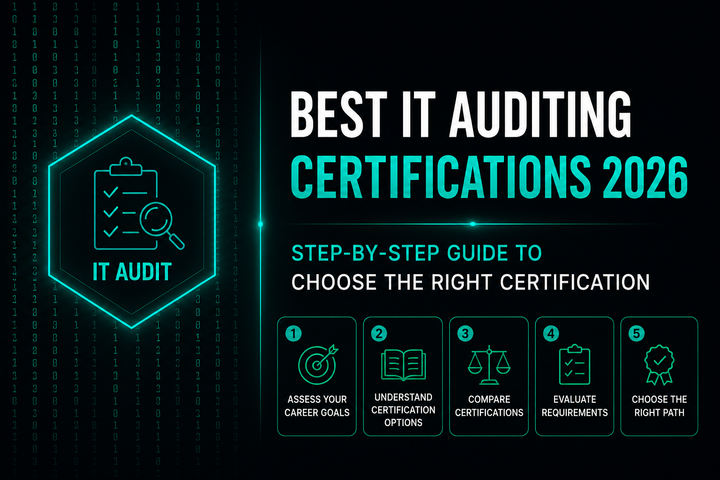
In 2026, IT auditing continues to be a critical function across organizations of all sizes. With the increasing complexity of cloud systems, cybersecurity threats, and compliance requirements, IT auditors play a key role in ensuring systems are secure, reliable, and compliant. Certifications validate expertise, build credibility, and open doors to advanced career opportunities.
This step-by-step guide walks IT professionals through the top IT auditing certifications in 2026, helping them select the right credential based on experience, career goals, and technical focus.
IT auditing certifications are more than just a resume booster. They demonstrate an individual’s ability to evaluate controls, assess risks, and provide actionable recommendations. Certified auditors often stand out to employers and clients for their credibility and professionalism.
These certifications also ensure auditors are prepared for evolving IT environments. For example, cloud migration, hybrid systems, and emerging cyber threats require auditors to understand both technical and governance perspectives. Certifications that integrate practical scenarios with conceptual knowledge help professionals succeed in real-world audits.
Before selecting a certification, define your career objectives. Ask yourself whether you aim to focus on technical auditing, risk management, governance, or security compliance. Entry-level auditors may benefit from broader certifications that establish foundational knowledge, while experienced professionals might pursue specialized credentials to demonstrate expertise in cybersecurity or risk management.
Understanding your career path also clarifies whether you should pursue operational auditing skills or strategic advisory roles. This helps narrow the certification options to those that align with your desired responsibilities.
Several certifications are recognized for their impact and industry relevance:
Each certification offers a unique mix of technical knowledge, practical application, and governance insight, making them suitable for different career paths.
Your existing experience should guide your choice:
Aligning certifications with your experience ensures you can grasp exam content efficiently and apply knowledge in real-world auditing.
Consider prerequisites, industry recognition, and potential career outcomes:
Choosing a certification with strong career alignment maximizes both earning potential and professional influence.
Cert Mage covers the topic with practical examples on YouTube:
| Certification | Primary Focus | Ideal Candidates | Career Benefits |
|---|---|---|---|
| CISA | Information systems audit | IT auditors, internal auditors | Strong industry recognition; prepares for senior audit roles |
| CISM | Security governance & risk | Security auditors, managers | Leadership credibility; advisory roles |
| CIA | Internal audit | Enterprise auditors | Comprehensive audit expertise across IT and finance |
| CRISC | Risk & control management | Risk auditors | Advanced risk assessment and mitigation skills |
| ISO 27001 Lead Auditor | ISMS audit | Compliance auditors | Specialized in auditing security management systems |
| CEH | Ethical hacking | Security auditors | Technical expertise to assess vulnerabilities |
This table helps professionals weigh technical versus governance focus and match certifications to desired career paths.
Successful preparation involves more than memorization:
A structured approach ensures readiness and boosts confidence for exam day.
Many auditors pursue multiple certifications to broaden expertise. For example, pairing CISA with CEH provides both governance and technical depth, while CRISC combined with CISM positions professionals as strategic risk advisors. This multi-certification approach increases versatility, career mobility, and overall impact in IT auditing.
An easy-to-digest visual version is shared via Cert Mage’s Facebook update.
Obtaining IT auditing certifications increases credibility with employers and clients, often leading to recognition in performance reviews and leadership opportunities. Certified auditors can access senior roles such as audit lead, risk consultant, compliance officer, or cyber risk manager.
Additionally, professionals with technical certifications like CEH can interpret security assessments more effectively, while governance-focused certifications like CISM prepare auditors to advise executive teams on risk strategy. Platforms like Cert Mage provide guidance and practice resources for professionals preparing for multiple IT auditing certifications.

Comments